
Members of Parliament leading an inquiry into whether safeguarding laws in the United Kingdom need reform in order to better protect children within religious settings are calling for survivors with lived experience to submit evidence before presenting a report on its findings to the Government.
Back in April, the All-Party Parliamentary Group (APPG) on Safeguarding in Faith Communities officially launched an inquiry into the effectiveness of current legislation at protecting children from harm and is expected to produce a report making recommendations to Government by March 2027. The inquiry is focusing specifically on the definition of ‘regulated activity’ and whether it needs to be amended so as to close loopholes used to exploit vulnerable children in religious groups.
At present, adults only require criminal record background (DBS) checks if their contact with children falls within specific categories and time periods. Providing “teaching, training, or instruction, care for or supervision of children” for instance, is only considered regulated if it takes place for more than 3 days in a 30-day period. This means no checks would be needed if an adult were to run kids activities at their local Church, so long as it occurs less than three times a month, leaving a loophole that could potentially be exploited by convicted child sex offenders. The system also relies on faith communities acting in good faith, with no overseeing regulator or provision designed to monitor whether organisations are carrying out the appropriate checks when needed.
When the inquiry was launched back in April, APPG Chair Ruth Jones MP said she had heard from a number of faith communities who expressed dissatisfaction with the concept of opening an inquiry into safeguarding rules, but made it clear in no uncertain terms that if these groups have nothing to hide, they have nothing to fear in assessing whether the current framework adequately protects children from harm.
The Gov.uk website explains current regulations apply to anybody working with a child, whether paid or unpaid, however DBS checks are only needed if contact occurs outside specified thresholds:
| Activity | Period condition | Age of child |
|---|---|---|
| Teaching, training, or instruction, care for, or supervision of children | On more than 3 days in a 30-day period, or once overnight between 2am and 6am with the opportunity for face- to-face contact with children | Under 18 – but not if the activity is in relation to the child’s paid or unpaid employment and they are 16 or 17 years old |
| Advice or guidance provided wholly or mainly to children about their educational, emotional, or physical wellbeing | On more than 3 days in a 30-day period, or once overnight between 2am and 6am with the opportunity for face-to-face contact with children | Under 18 – but not if the activity is in relation to the child’s paid or unpaid employment and they are 16 or 17 years old |
| Moderating a web service wholly or mainly for children | On more than 3 days in a 30-day period | Under 18 |
| Driving a vehicle for children | On more than 3 days in a 30-day period | Under 18 |
| Healthcare or personal care | No requirement – once is enough | Under 18 |
| Registering to be a foster carer or private foster carer | No requirement | Under 18 |
| Registering to be a childminder or childcare provider, including voluntary registration | No requirement | In line with regulations |
| Day-to-day management of someone in regulated activity with children | No requirement | Under 18 |
A paper published last year by Thirtyone:eight, the secretariat to the APPG, warned of “significant gaps” in the current definition of regulated activity and included examples such as Sunday schools and religious residentials where volunteers may come in to contact with children but fall below the threshold of being regulated. “Current loopholes mean many volunteers and workers who have unsupervised access to children are not subject to enhanced DBS checks due to the frequency of their role, increasing the risk of harm,” it reported. “Faith leaders and other trusted figures may not be properly vetted, leading to misplaced trust.”
The inquiry has set out to assess the understanding and application of the definition of ‘regulated activity’ for faith communities and organisations; identify strengths, weaknesses, and areas of risk related to the definition of ‘regulated activity’ for faith communities and organisations; and provide findings and recommendations, as appropriate.
It is now seeking input from survivors and is inviting written submissions to inform their report. Submissions may include, their website states, “case studies, examples of practice, or lived experience, research, data, and policy analysis that help illuminate both the strengths and challenges relevant to the inquiry’s focus. While contributors are welcome to reference practical examples, the inquiry will not consider broader debates outside the scope of the inquiry’s remit.”
The inquiry has set out a series of guiding questions and is asking for submissions to answer at least one of the following:
- To what extent is there a shared and consistent understanding and application of the definition of ‘regulated activity’ across faith communities and organisations?
- What are the strengths of the current definition in the context of faith communities and organisations?
- What complexities and loopholes arise from the application of the current definition in the context of faith communities and organisations?
- What are the associated risks of the current definition for faith communities and organisations?
- What are the implications of these associated risks for safeguarding practices and promoting safe environments for faith communities and organisations?
- What would strengthen the current definition of ‘regulated activity’ and understanding and application of the definition in practice for faith communities and organisations?
Submissions must not exceed 2,500 words and can be submitted via email to appg@thirtyoneeight.org. The website states “contributors are encouraged to include their name, organisation and role, and to indicate clearly if they would prefer not to be referenced or quoted in the final report. You should not include names or identifiable details about individuals or specific safeguarding cases without consent.“
“Your evidence will play an important role in shaping the inquiry’s findings and recommendations. We are grateful for the time and expertise you contribute and thank you in advance for your engagement.”


5 responses
It's commonplace among exes to remember a childhood spent hanging around an org all day to enable their parents to take courses.
In such cases they are either unsupervised (which is illegal if they are under a certain age) or supervised by adults for more than the defined period.
Of course, obtaining evidence that this is the case would be difficult.
IANAL, but I believe that to a degree, witness testimony can be considered evidence.
It is — but only if the jury finds it credible.
Scientology, of course, does unbelievable things all the time, and people like me can need time and study to understand that
These folks need to take a hard look at the "High Crimes" section of "Introduction to Scientology Ethics" to at least get a glimmer of why Scientology will never agree to any self reporting mechanisim. Any Scientology facility involved with children needs to be monitored, closely, by an outside agency.
Just a few highlights from the "Ethics' manual to illustrate why this is so:
HIGH CRIMES
A. ATTACKS ON SCIENTOLOGY AND SCIENTOLOGISTS
1. Proposing, advising or voting for legislation or ordinances, rules or laws directed towards
the Suppression of Scientology.
2. Testifying hostilely before state or public inquiries into Scientology to suppress it.
3. Public statements against Scientology or Scientologists but not to Committees of Evidence
duly convened.
4. Reporting or threatening to report Scientology or Scientologists to civil authorities in
an effort to suppress Scientology or Scientologists from practicing or receiving standard
Scientology.
5. Bringing civil suit against any Scientology Organization or Scientologist including the
non-payment of bills or failure to refund without first calling the matter to the attention
of the Chairman at World Wide and receiving a reply.
6. Writing anti-Scientology letters to the press or giving anti-Scientology or anti-
Scientologist evidence to the press.
7. Testifying as a hostile witness against Scientology in public.
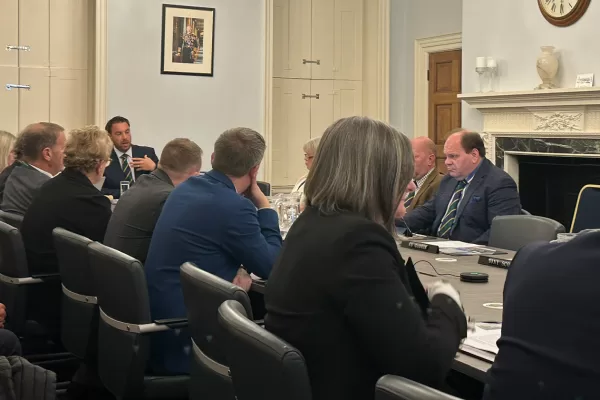
Definitely. When the inquiry launched, I held up a copy of the Ethics book and described how reporting a fellow Scientologist to law enforcement is considered a High Crime… the room was shocked. Here's the article I wrote at the time, in case you missed it: https://www.scientologybusiness.com/featured/uk-opens-inquiry-into-child-safeguarding-in-faith-communities/