
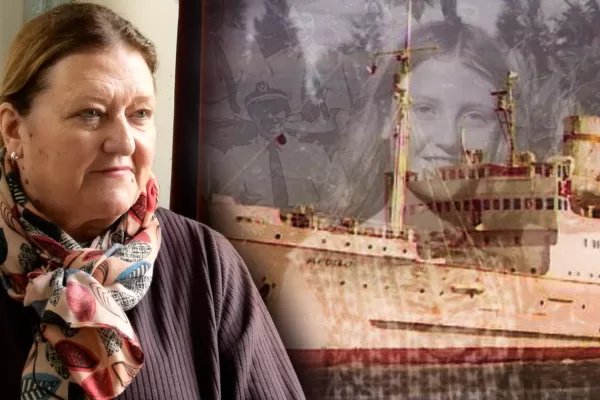
Following my accounts published on-line, in the Daily Mail, The Sun and on YouTube, in which I describe being trafficked as a child, unaccompanied by either parent, to L. Ron Hubbard’s flagship, the Apollo, I want to explore something I have spoken about far less: the psychological consequences of what happened to me.
My previous accounts have described how, at the age of 11, I was sent to the Apollo to train as a ‘Commodore’s Messenger’, working for L. Ron Hubbard, and how, approximately a year later, I was confined on his orders in the ship’s chain locker for three days and three nights.
But what I want to examine now is not simply what happened to me. It is what those experiences did to my mind, my emotional development and my understanding of the world. And perhaps most importantly why did I stay?
It is a question that might seem perfectly reasonable to someone looking at the circumstances through adult eyes. Why didn’t I refuse? Why didn’t I run away? Why didn’t I tell someone? But I wasn’t an adult. I was a child. And that distinction is fundamental to understanding everything that followed.
By the time I arrived aboard the Apollo, I was already an exceptionally vulnerable child.
I had been in the United Kingdom for less than three months, having arrived following the breakdown of my mother’s marriage to my stepfather. My earlier childhood had been marked by family instability, involvement in Scientology courses from age 6, an abusive stepfamily, periods in boarding school and an almost complete absence of the emotional security that children need.
I had attended school in South and Africa and Rhodesia, but had grown up without consistent adult guidance, affection or protection. Looking back, I believe I was already emotionally overwhelmed long before I ever set foot on that ship.
My mother had agreed to send me there alone, supposedly to train for an important position within the Scientology Sea Organisation. I was assigned someone known as a ‘Minor’s Mate’, an adult ostensibly responsible for my welfare. But she had her own work responsibilities, and her involvement in my life was insufficient to provide the care and protection I desperately needed.
I had no parent beside me, no dependable adult to turn to and no real understanding of the circumstances into which I had been placed.
What strikes me now is how completely the normal protections of childhood had disappeared. I was expected to function in an adult world, obey adult rules and accept adult punishments, while possessing none of the emotional maturity, independence or power of an adult.
Why Didn’t I Leave? This is perhaps the question that fascinates and troubles me most. Why did I remain in an environment where I was frightened, neglected and ultimately subjected to appalling treatment? The answer, I have come to understand, lies partly in how children adapt to the world around them.
Children are not born knowing what is normal. They learn what is acceptable through their experiences and, most importantly, through the behaviour of the adults responsible for them. When instability, rejection, fear and obedience become familiar features of childhood, a child can begin to accept them as simply the way life is.
I had no meaningful experience of being able to challenge authority or exercise control over my own circumstances. Decisions about where I lived, where I went and what happened to me had always been made by other people. The idea that I could simply say ‘no’ or walk away was not something I had been taught to recognise as a possibility. I also had nowhere obvious to go. My mother had agreed to send me there. The around me were part of the organisation. I was aboard a ship, separated from the outside world, with no independent means of leaving.
What might appear to an outsider as a failure to escape was, in reality, a child with almost no power to change her circumstances.
And there was another, more complicated factor; indoctrination.
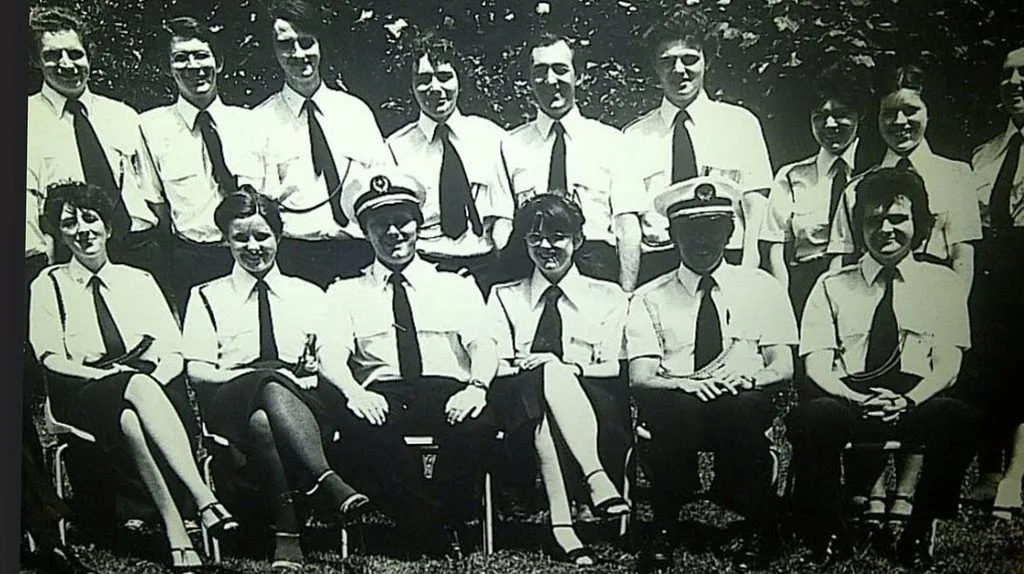
Scientology did not simply impose rules about how I should behave. It provided an entire framework through which I was expected to understand myself and the world. Authority was presented as something to be respected and obeyed. The organisation’s objectives were portrayed as extraordinarily important, and personal needs could be treated as insignificant by comparison. For a child desperate for belonging, approval and some sense of purpose, that can be an enormously powerful influence.
Being selected to train as a Commodore’s Messenger could appear to offer something I had been missing: a role, an identity and a reason to feel that I mattered.
I now wonder whether the very things that made me vulnerable also made me particularly susceptible to indoctrination.
When a child has experienced little unconditional love, approval can become something to work desperately hard to obtain. When belonging has been uncertain, membership of a group can feel like security. And when obedience has been demanded throughout childhood, questioning authority may not even occur as a realistic option.
This is one of the most disturbing aspects of coercive environments. People can come to internalise the beliefs and expectations of those who control them, even when those same people are responsible for their suffering. The boundaries between what we genuinely believe and what we have been conditioned to accept can become blurred. I did not have the emotional or intellectual freedom to stand back and critically evaluate what was happening to me. I was trying to survive within it.
By the time I was eventually ‘offloaded’, as the organisation called it, from the Apollo and returned to the United Kingdom, I was, in my own words, completely broken. I remember myself as numb, almost catatonic.
Today, I am interested in understanding whether what I experienced was a form of psychological shutdown.
When someone, particularly a child, is exposed to prolonged fear, helplessness or overwhelming stress, the mind can respond in ways that are not immediately obvious. Not everyone fights back. Not everyone runs away. Sometimes the response is to become quiet, compliant, emotionally detached or seemingly accepting of what is happening.
These responses can be understood as adaptations to circumstances in which resistance feels impossible or dangerous. What looks like passive acceptance may actually be a form of survival.
I wonder how much of my apparent compliance was simply my mind finding a way to endure what I could neither understand nor escape. I also wonder what happened to the emotions I could not safely express. Where does a child’s anger go when anger is not permitted? What happens to fear when there is nobody to offer reassurance? What becomes of sadness when there is nobody to comfort you?
And what happens to a developing personality when so much of its energy is devoted to avoiding punishment, meeting expectations and surviving each day?
Before arriving in the United Kingdom, I had attended school in both South Africa and Zimbabwe (old Rhodesia). My education may have been disrupted by the upheavals in my family life, but I had been receiving an education. That changed when I was sent to the Apollo.
For approximately a year, at an age when education and intellectual development are particularly important, I received no formal schooling whatsoever. Instead, I was expected to work and train within the Sea Organisation.

When I eventually returned to the UK, I was simply expected to pick-up where I had left off, despite having missed an entire academic year. I was not held back a year, nor was there any meaningful attempt to compensate for what I had lost. I was expected to catch up, as though the missing year – and everything I had experienced during it – were of no consequence.
Looking back, I find this extraordinary. Not only had I been subjected to emotional and psychological trauma, but I had also been deprived of an entire year of education, with the responsibility for overcoming that disadvantage effectively placed upon me.
Despite these obstacles, I managed to scrape through with some ‘O’ levels. I subsequently went on to study for my ‘A’ levels, but even that opportunity was taken away when Scientologists prevented me from completing them.
The consequences were not merely academic. Education gives children far more than qualifications. It develops independence, critical thinking, confidence and the ability to question the world around them.
I now wonder whether denying me a conventional education also made me more dependent upon the organisation controlling my life. Without exposure to different ideas, perspectives and ways of thinking, how does a child begin to recognise that they world they inhabit is not normal?
I cannot recover that lost year, not can I know what educational opportunities might have opened up had I been allowed to complete my ‘A’ levels. But I can recognise that the loss was real, and that it was of my making.
Side note: It is something of great pride to me, that in later years following my escape from Scientology that I was able to gain my degree at university.
Perhaps one of the most difficult things for someone outside Scientology to understand is that, despite everything I had experienced aboard the Apollo, I did not return to the UK questioning the organisation or rejecting its teachings. Quite the opposite. I became what I can only describe as a dedicated little soldier, following Scientology’s teachings avidly and accepting its ideology as the framework through which I understood the world.
This is something I find particularly fascinating when examining my experiences through the lens of psychology. How could a child who had experienced such cruelty and neglect become even more devoted to the very organisation responsible?
I believe part of the answer lies in the power of indoctrination, particularly when it begins during childhood.
When a belief system becomes deeply embedded in a child’s developing identity, it is not necessarily abandoned simply because the child experiences suffering within it. Indeed, questioning the organisation might also mean questioning everything the child has been taught about themselves, their purpose and their place in the world.
There is a psychological concept known as cognitive dissonance, which describes the discomfort experienced when our beliefs conflict with our experiences. I wonder whether this helps explain some of my own behaviour?
If I had been taught that Scientology was fundamentally good, that its mission was extraordinarily important and that its leadership possessed exceptional wisdom, how was I supposed to reconcile those beliefs with what happened to me?
One possible way of resolving that contradiction was not to question the organisation, but to accept that I had somehow deserved what happened, or that my own shortcomings were responsible. I cannot say with certainty that this was my conscious thinking at the time. But I do wonder whether it was part of the psychological process that allowed my loyalty to continue. Instead of recognising myself as a child who had been mistreated, I became increasingly committed to the very system within which that mistreatment had occurred. I had been conditioned to believe I wasn’t a child. I was an adult in a small person’s body, and as a Scientologist it was my duty to overcome the barriers of the physical world.
My commitment eventually took me to Scientology’s headquarters in Clearwater, Florida, where I spent a year undergoing Executive and Administrative training. I then returned to the UK to take up the position of LRH Communicator UK – L. Ron Hubbard’s Communicator. It was a position of considerable responsibility within the organisation, particularly for someone still so young.
Looking back, I am struck by the extraordinary contrast between the vulnerable child who had arrived aboard the Apollo and the committed young Scientologist I became. On the surface, I was functioning, working, learning and taking on responsibility. But was I thinking independently? Had I genuinely chosen this path, or had my sense of identity become so intertwined with Scientology that I could no longer distinguish my own wishes from those of the organisation?
I had grown up learning to obey, to adapt and to seek approval. Scientology provided a structured world in which obedience and dedication were valued, and which I had a defined purpose. Perhaps being a dedicated little soldier was not evidence that I had recovered from happened aboard the Apollo. Perhaps it was evidence of just how thoroughly I had adapted to the world in which I had been placed.
I remained within Scientology for approximately another six to eight months after returning from Florida before I finally managed to escape.
The catalyst for my departure was what happened to my mother. She was just around 42 years old when she suffered a stroke, following approximately three weeks of working with very little sleep or adequate sustenance. She had been pushed, or had pushed herself, to continue working in circumstances where her basic physical needs were not being met. And then her body gave way.
What happened next was, for me, a turning point.
My mother was taken out of hospital by Scientologists while she was completely incapacitated by the stroke. She was unable to make decisions for herself. She had not yet received vital medical treatment, and the justification given for removing her was that Scientology could heal her.
I find this particularly disturbing when I reflect upon it today. Here was a 42-year-old woman who had suffered a devastating medical emergency. She was in no condition to make an informed decision about her treatment, yet others took it upon themselves to remove her from medical care, apparently believing that Scientology’s methods could provide the healing she needed. Her vulnerability should have made her protection the absolute priority. Instead, as I witnessed it, the organisation’s beliefs were placed above her medical needs.
For years, I had accepted Scientology’s authority, even when I was the one suffering. But witnessing what happened to my mother confronted me with something I could no longer accept. And perhaps that is one of the most revealing,
I had been conditioned to tolerate the abuse and neglect inflicted upon me, but seeing my mother placed in such a vulnerable and dangerous position became the catalyst for my escape.
It was the beginning of my recognition that unquestioning loyalty to an organisation could have devastating consequences, particularly when its beliefs were allowed to override the fundamental rights and welfare of another human being.
I find it psychologically significant that, having endured so much myself, it was what happened to someone else that became the catalyst for my departure. Perhaps I had become so accustomed to accepting my own suffering that I struggled to see it as wrong. But seeing my mother’s health placed at risk confronted me with something I could no longer reconcile with the organisation’s claims.
How much must someone witness before they begin to question a system they have been conditioned to believe is infallible? And why is it sometimes easier to recognise the mistreatment of someone we love than the mistreatment we have experienced ourselves?
After years of being the dedicated little soldier, I managed to escape. But leaving the organisation was only the first step. Understanding what had happened to me and disentangling my own identity from the beliefs that had shaped my adolescence, would be an entirely different journey.
One of the misconceptions about childhood abuse is that the damage ends when the child is removed from the abusive environment. But leaving a place does not necessarily mean leaving behind the beliefs, fears and survival strategies acquired there.
A child who learns that obedience is essential may grow into an adult who struggles to challenge authority. Someone whose needs were consistently disregarded may find it difficult to recognise that those needs matter. A person who experienced repeated rejection may become particularly sensitive to disapproval or feel an overwhelming need to prove their worth. And someone who has been conditioned to believe that suffering serves a greater purpose may take years to recognise the injustice of what happened to them.
I am not suggesting that every difficulty I have experienced in adulthood can be attributed to my time aboard the Apollo. Human beings are far more complicated than that, and my childhood contained other experiences that undoubtedly shaped me. But I do believe that what happened during those formative years had consequences that extended far beyond the ship itself. I am still trying to understand where the child I once was ends and the person I became begins.
Perhaps once of the most important realisations in examining my past is that the question should never really have been why I stayed. The question should be why the adults responsible for me allowed me to be there? Why was an 11-year-old child sent alone to live and work aboard a ship under the authority of a powerful religious/cult leader? Why was my welfare not placed above the demands of the organisation? Why was there no effective adult protection? And how could a child ultimately be subjected to the terror of confinement in a chain locker for three days and three nights?
There are questions about adult responsibility, institutional power and the vulnerability of children. I was not responsible for recognising that the environment was harmful, nor was I responsible for finding a way out of it. I was a child.
What interests me most now is not simply recounting the cruelty or neglect but understanding how the human mind adapts to circumstances that should be intolerable. How indoctrination can reshape a child’s understanding of right and wrong. How a desperate need for belonging can override the instinct to question. How fear can become normal. How obedience can become automatic. And how, long after the physical circumstances have changed, the psychological consequences may remain?
I want to understand not only how I survived those experiences, but how they influenced the person I became. Because the story of what happened to me did not end when I stepped off that ship. In many ways that was only the beginning.
Perhaps this is why, more than 59 years later, I remain so determined to speak out against Scientology and other high-control groups that use indoctrination, coercive control and psychological manipulation to exert power over people’s lives.
My experiences have given me an understanding of just how deeply such control can affect a person, particularly when it begins in childhood. I know what it is to be indoctrinated. I know what it is to believe wholeheartedly in something, to follow its teachings without question and to accept authority even when that authority is responsible for causing harm. I also know how extraordinarily difficult it can be to break free.
I want to make something very clear. I have no quarrel with anyone’s rights to hold religious or spiritual beliefs. If someone wishes to believe in Scientology’s teachings, scriptures or policies, that is their choice. Freedom of belief is a fundamental human right, and I respect it. But freedom of belief must never be confused with freedom of abuse.
No religious doctrine, spiritual philosophy or organisational policy should ever be used to justify the mistreatment of another human being. No child should be deprived of an education, separated from appropriate parental care, subjected to forced labour, child trafficked, raped, sexually abused or punished for failing to meet the demands of an organisation.
No adult should be subjected to intimidation, coercive control, sexual or physical abuse, exploitation, or psychological abuse under the guise of spiritual advancement or loyalty to a cause. And no organisation should be beyond scrutiny simply because it describes itself as a religion.
This is not about attacking faith. It is about challenging the abuse of power. What concerns me the most is that the patterns of control and abuse described by survivors of high-control organisations continue to emerge, often across very different belief systems and communities.
The names, doctrines and leaders may differ, but the underlying mechanisms can be remarkably similar; isolation, fear, dependency, unquestioning obedience, punishment for dissent and the gradual erosion of person autonomy and agency. I recognise these patterns because I lived through them. I simply cannot look away when others describe experiences that echo my own.
I speak out because I believe that those who have experienced coercive control deserve to be heard, believed, and protected. I campaign because children and vulnerable adults should never be left at the mercy of organisations that place their own interests above basic human rights.
I do not expect everyone to agree with my views about Scientology, not do I need them to reject its beliefs. What I ask is that they recognise a simple distinction. Belief is not a personal freedom. Abuse is not!
For me, this is no longer simply about what happened to an 11-year-old-girl aboard a ship more than 53 years ago. It is about what continues to happen when authority goes unquestioned, when coercive control is normalised and when institutions are allowed to put their reputations and ideologies ahead of human welfare. I cannot change what happened to me as a child. But I can use my voice to challenge the circumstances that allowed it to happen, and to fight for a world in which other children, and adults, are better protected.
That is why I continue to speak out. And that is why I will not be silent.
Leave a Reply
You must be logged in to post a comment.