
The UK Government has recognised victims of abuse within cults and high control groups, denouncing practices like shunning and Scientology’s disconnection policy and pledging to do more to support survivors.
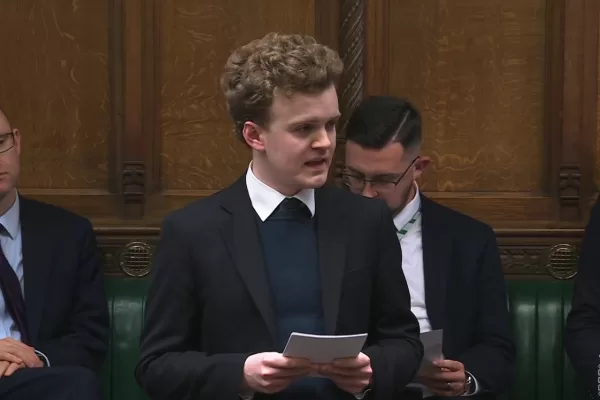
In a debate held today in the House of Commons, Sam Carling MP voiced concerns about gaps in legislation and a lack of support available for cult survivors. Referencing Scientology specifically, he called on the Government to recognise survivors and ensure their voices are heard. In response, Parliamentary Under-Secretary for Victims and Tackling Violence Against Women and Girls Alex Davies-Jones pledged to work closely with survivors and advocacy groups like the Family Survival Trust to close the gaps in the UK’s coercive control legislation cults exploit in order to abuse their members. She told the Commons “survivors and victims deserve to be heard. They deserve to be taken seriously and to be treated with dignity.”
“Freedom of faith and belief are of course, a fundamental right,” Davies-Jones said. “But that freedom must never, ever be used as a shield for coercion, exploitation or abuse. The right to practice your faith must go hand in hand with the ight, if you so choose, to leave it.”
“We must do better.”
You can read the transcript from today’s debate below:
Sam Carling MP (North West Cambridgeshire) (Lab):
In recent weeks we have seen a number of powerful men held to account for hideous abuse, particularly towards women, and I pay tribute to those victims who have fought for too long to be heard and taken seriously. However, I have initiated this debate to speak on behalf of another group of victims who often face significant barriers to being heard and believed, because society struggles to understand what has happened to them. I refer to victims of cults and high-control religious groups. These are organisations that go far beyond the acceptable boundaries of a mainstream religion and take over people’s lives, using fear, shame, isolation and authoritarian power to control and coerce their members. Most people are not aware of the extent to which groups like this can operate in the UK, because by their very nature they are often quite secretive or seem benign to the outside world. That is one of the primary reasons why the victims of such organisations so often struggle to be believed: people simply do not accept that this can be going on in modern society.Let me take a moment to comment on the attendance in the Chamber tonight. It is rare for more than three or four Members to be present for an Adjournment debate, but the breadth of those who have come to show support demonstrates that people care about this issue, which affects our constituents. I am very grateful to them all.
I will focus on religious groups, but it is important to recognise that cults do not have to be religious in nature. There can be cults in all sorts of areas—any areas in which an “us versus them” narrative can be built. Victims from those backgrounds also deserve be heard.
Jim Shannon MP (Strangford) (DUP):
I commend the hon. Gentleman for bringing this issue to the House, as he has in the past. It is important to mark the concerns of local parents for their children and the need to protect ordinary parenting for those who believe in religious freedoms. It is the high-control religious groups who use intimidation and manipulation to control individuals. Does the hon. Gentleman agree that such behaviour must be distinguished from ordinary religious teaching and genuine pastoral care, and that genuinely coercive harmful practices are more carefully targeted by legislation?Sam Carling MP:
I thank the hon. Gentleman for making that point. I entirely agree with him about the importance of making that distinction clear, as I will later in my speech. We all have many fantastic religious organisations in our communities, and they do brilliant work.The types of abuse that I will discuss tonight, and the organisations that I will use to exemplify each one, are varied, but together they are often termed “spiritual and ritual abuse”, when spirituality or culture are weaponised to inflict harm.
Tessa Munt MP (Wells and Mendip Hills) (LD):
I entirely accept the hon. Gentleman’s point about religious groups, but having thought about it earlier today and with the help of some of the casework that I have received, I have established that also included are spiritual enlightenment groups, multi-level marketing, group awareness training, internet-based psychotherapy groups and personal growth organisations. What they have in common, of course, is coercive control. Does the hon. Gentleman agree that coercive control must cover all sorts of cults and belief systems, and that that needs to be included in the regulations that are currently going through Parliament?Sam Carling MP:
I am grateful to the hon. Lady, with whom I have worked on this issue for some time, for making those points. I will respond to some of them later in my speech.I want to tell a victim’s story—that of Rachael Reign, who escaped from the Universal Church of the Kingdom of God and now runs a survivor advocacy group, Surviving Universal UK. Rachael joined the organisation when she was 13, and before long she was warned that the devil would use people close to her to tell her bad things about the Church and encourage her to leave. That was made out to be a test of faith, but in reality, it was the beginning of coercive control and psychological subjection to create a dependency in her mind on the Church, and to shut down her critical thinking. Each Friday, she had to attend an exorcism service, with intense prayers involving physical contact and telling her that she had demons within her. Later, she was made to perform exorcisms herself, including on traumatised people, and she was told that if she ever left, all the demons that she had cast out of herself and others would be waiting for her. A BBC “Panorama” documentary in 2023 secretly filmed the Church doing this to a 16-year-old, and reported how a gay ex-member said that he was subjected to similar “strong prayers” at 13 years old to try to change his sexuality.
Samantha Niblett MP (South Derbyshire) (Lab):
I thank my hon. Friend for securing this really important debate. The Government’s recent report tells the story of a gay man whose parents used emotional blackmail and manipulation, including making him attend group prayers in an attempt to “pray away the gay”. Does my hon. Friend agree that we must get the conversion practices draft Bill across the line and passed into an Act as soon as possible?Sam Carling MP:
I absolutely agree with my hon. Friend. I am really pleased that she has raised that, because a significant amount of that abuse is going on, disguised as therapy or some other helpful practice, when it absolutely is not that. It is entirely relevant to the abuse I am discussing, and I appreciate her raising that.In an article in The Guardian earlier this year, other victims spoke of the Universal Church of the Kingdom of God’s financial exploitation of its members through “prosperity gospel” teachings. A victim, referred to in the article as Jennifer, was coerced into handing over £15,000, despite the Fundraising Regulator later finding that the church breached the fundraising code. The church was aware of her previous mental health issues when it took a large donation from her, and did not have policies in place regarding vulnerable donors. Other victims named in the article, including Rachael, corroborate the constant, extreme pressure placed on people to give huge sums. Rachael was coerced into giving regular tithes from the age of 13, and she was taught that she would otherwise have a “devouring spirit” descend upon her life and that she would be “robbing from God”.
This group is a cult, and it is spreading through London at pace, particularly targeting black people. It is also legally classified as a charity, meaning that it receives tax exemptions and significant public money through gift aid. With a donation and legacy income of over £13 million in the year to March 2025, in theory up to £2.5 million of that could be direct public gift aid subsidy. I have called before in this House for fundamental changes to charity law that would stop that, and I hope the Government will take that on board. I also urge the Government to look at putting the Fundraising Regulator on a statutory footing, so that it can be empowered to hold organisations accountable for failures.
The clear threads in these stories are coercive control through financial exploitation, threatening horrific consequences for leaving, and shutting off critical thinking. Such coercive tactics are commonplace in high-control groups. Another is mandated shunning, whereby adherents are ordered to ostracise former believers who have left, even if they are close family. In my previous Adjournment debate in March, I spoke about how the Jehovah’s Witnesses, the group I was raised in, do that. It happens when people leave of their own accord, or when the religion forces them out for doing something it considers sinful—being gay, for example, as we have just discussed. There are also cases where someone has been sexually abused within the Witnesses. When they have reported it, their abuser has faced no consequences but they, as the victim, have faced shunning, which may lead to homelessness—for example, if someone’s parents shun them and force them out of the home.
Similar shunning occurs within Scientology, which retains a significant presence in the UK. Scientologists are required to adhere to a strict system of internal ethics. Reporting another Scientologist to the police is considered a “crime” and will result in expulsion and forced disconnection, so someone can lose everybody and everything they have ever known, even if they are a child—a clear sign, once again, that it a cult. Over the summer, The Times published the results of an undercover investigation into Scientology. Children as young as 13 are being taken out of school and made to work full time for a pittance, having signed so-called “staff contracts”. One 15-year-old girl was found to be administering massages to adult male staff.
I cannot see how that is not modern slavery, yet the church insists that these children are “religious volunteers”, and nothing has been done to put an end to the practice since the article came out. Indeed, as far as I and the survivors I work with are aware, pretty much every case where an ex-Scientologist has reported abuse, modern slavery, human trafficking or harassment to the police in recent years has been closed without investigation. Police forces up and down the country seem to consider such claims too unbelievable to be happening in 2026, yet they are happening. Will the Minister follow that up as a policy point with the police? The media are very reluctant to do so for fear of legal action, but will the Minister join me in very deliberately referring to the brave people who have escaped Scientology as victims and survivors, in recognition of their experience?
The children I have referred to will not receive a secular education, as many people growing up in high-control groups do not, and thus they will be trapped, with their entire networks in the organisation and without any qualifications. When people do not have exposure to the secular world, they do not know how it works and they cannot just leave.
Sureena Brackenridge MP (Wolverhampton North East) (Lab):
I am very grateful to my hon. Friend for securing this important debate. A mother recently came to see me with concerns about her adult daughter’s involvement with a religious organisation locally. She described how her daughter was once very close to the family, but became increasingly isolated. Concerns were also raised about financial contributions she made while she was a student and struggling to pay everyday basic costs. Of course, freedom of religion is a fundamental right, but does my hon. Friend agree that there may be a gap in the support available to families when concerns arise about undue influence, social isolation or financial pressure in organisations that fall outside the scope of existing legislation on coercive and controlling behaviour?Sam Carling MP:
My hon. Friend’s intervention lets me make a really important point. Stopping psychological subjection in high-control religious groups is not anti-freedom of religion; it is pro-freedom of religion. People who are trapped do not have free choice, and creating true free choice means making sure that people are free to change their religion or leave a religion. I will shortly come to her point about support.Luke Myer MP (Middlesbrough South and East Cleveland) (Lab):
Coercive control is wrong in any context, but does my hon. Friend agree that there is something particularly insidious about religious and faith-based abuse, because it preys on something as intensely personal as someone’s faith?Sam Carling MP:
I agree entirely, and it is a very deep perversion of what religion is meant to be. I speak as someone who is not religious but who recognises how much value religion and faith can add to people’s lives. To distort and twist that in such a way is deeply wrong.When people in these cults and high-control groups take the extraordinarily brave step of leaving, despite the immense barriers to doing so both physically and psychologically, who is there to support them and what help can they find? The answer is very little. There is a deep lack of awareness among therapists and care professionals about this deep-reaching type of abuse and harm.
Kim Leadbeater MP (Spen Valley) (Lab):
I thank my hon. Friend for securing what, as others have said, is a really important debate. For someone to leave their high-control religious group or cult can mean losing their family, friends and community all in one go. Would he join me in paying tribute to the volunteers and organisations who support people at what can be an extremely lonely and difficult time, including Faith to Faithless run by the Humanists UK?Sam Carling MP:
I am grateful to my hon. Friend, and I will shortly sing those volunteers praises, because it is very much right that we thank them.People just cannot understand why victims in these groups do not leave early, or why they stayed. The themes of thought control, financial exploitation, isolation from family and friends, and threats against leaving should sound familiar, because they are exactly the things that characterise domestic abuse and coercive relationships. Indeed, the Government’s statutory guidance on what could constitute criminal coercive behaviour puts it as
“a range of acts designed to make a person subordinate and/or dependent by isolating them from sources of support, exploiting their resources and capacities for personal gain, depriving them of the means needed for independence, resistance and escape and regulating their everyday behaviour.”
That is a very good definition, but there is a catch. Under the current law, coercive control can take place only in a family or in a romantic relationship, so when religious leaders or cultic groups do exactly the same thing, it is not covered. The Family Survival Trust has been campaigning to change that. It is one of the few organisations that specifically aims to support cult survivors, and one to which I often refer cult survivors who write to me, alongside the excellent Faith to Faithless service operated by Humanists UK, which supports people leaving a range of different religions and the consequences that can bring.
May I ask the Minister and officials to look at the Family Survival Trust’s extensive report on coercive control and cultic groups in the UK, published in 2022, which sets out the scale of the problem far more than I can in the time I have available? Would she agree to meet me and the Family Survival Trust to explore options for legislative reform? That could mean a change to the existing coercive control law through the Serious Crime Act 2015 to remove the requirement for a family or romantic connection, or it could mean a new offence.
Governments around the world are waking up to the reality of what people are being subjected to.
France has had legislation in place since 2001, focusing not on particular organisations but on the psychological subjection tactics they use. It strengthened that in 2024. Belgium passed an abuse-of-weakness law in 2011, and Luxembourg passed a similar law in 2013. Several proposals aimed at combating psychological manipulation, particularly in relation to high-control groups, are under consideration in the Italian Senate, and the Government of the Netherlands consulted earlier this year on a proposed Bill, too. In the Australian state of Victoria, a parliamentary committee published an extensive report in July this year, specifically on the recruitment methods and impacts of cults and organised fringe groups. It concluded that there was “a clear case for legislative reform” to capture “group-based coercion as a distinct criminal offence”.
So there are a range of options available to us. I urge the Government to work with me to consider them in detail, and to bring forward measures to combat the very real phenomenon of psychological subjection in high-control groups in the UK.
Let me turn briefly to what else we can do to support victims right now. In 2023, the Bloom review was published, an independent review of how Government engage with faith. There are some things in there that I do not agree with, but on the whole, I think it is a very valuable report that made important recommendations around countering extremism and supporting victims of high-control groups. True to form, the previous Conservative Government welcomed the report, said that they would consider the recommendations carefully, and then proceeded not to lift a finger on them. I want to cite recommendation 19:
“Government should fund a programme that supports vulnerable people to leave high-demand groups, high-control movements (often referred to as cults) or religious groups. In addition, this work should help people who face isolation as so-called ‘apostates’ and those facing threats of homelessness, shunning and honour-based abuse.”
It goes on to praise Humanists UK for its work in this space. Its Faith to Faithless helpline launched in February 2024, and within its first year, over 500 people received crucial support. But the support those incredible volunteers offer cannot match demand, and it cannot provide the deep-reaching therapy that many victims need to overcome years of abuse.
I had the privilege recently of hosting a parliamentary screening of the BBC documentary, “Inside the Cult of the Jesus Army”, at which I met several survivors from that organisation. I also met Gillie Jenkinson, a psychotherapist who specialises in helping cult survivors, having spent much of her 20s in a cult herself. She has called for the NHS to offer specialist counselling for those leaving cults. That is a deeply specialist type of support that just does not exist on any major scale right now. Gillie has spoken of trying to find that support herself and finding none; that is what motivated her to train and develop her own practice. Will the Minister work with Government colleagues to examine how we can develop much-needed expertise in this space, within NHS-funded counselling? What can the Government do to provide support for people to rebuild their life?
Connor Naismith MP (Crewe and Nantwich) (Lab):
My hon. Friend is giving a powerful speech and deserves immense credit for bringing forward this debate. Allegations against members of the Ahmadi Religion of Peace and Light, headquartered in my constituency, are a matter of public record. Local children’s services and Cheshire police are, unfortunately, shouldering the burden of carrying out due process in that case. Does my hon. Friend agree with me that in the aftermath of such cases, we really need cross-Government co-ordination and resourcing to ensure that local communities do not pay the price?Sam Carling MP:
I remember seeing that case earlier this year, and I was very sorry to hear what happened, when I learned more of the details. That is exactly why we need the Government to take high-control groups seriously at policy level. We need to create the powers and offences to deal with cases like the one in my hon. Friend’s constituency before they become catastrophic and create more victims who need more immediate support, so that this harm is prevented.I am coming towards my conclusion. Perhaps the Minister could consider picking up once again the recommendations in chapters 6 to 8 of the Bloom review and providing a substantive response to it; the Conservative Government who commissioned it failed to do so. One of the major issues, in my view, is that supporting victims who are leaving high-control groups does not fit neatly into any Government Department. There are safeguarding and crime concerns for the Home Office; implications for faith, on which the Ministry of Housing, Communities and Local Government leads; links to healthcare, as I have just outlined; and I highlighted earlier the problems that a lack of education can create for employment. There are also implications for charity law and regulation, which comes under the Department for Digital, Culture, Media and Sport. This is truly cross-cutting.
What steps can the Government take to create ownership of this issue? Could they set up a dedicated unit of some sort against spiritual, ritual and cultic abuse, or give a named Minister responsibility for co-ordinating across Government in this space? Until Government and Parliament take this issue seriously, people will continue to suffer, and I know that all of us want to ensure that is not the case. So let us have the courage to do what Governments have shied away from for too long: call this out and put an end to it.
The Parliamentary Under-Secretary of State for Justice (Alex Davies-Jones):
I congratulate my hon. Friend the Member for North West Cambridgeshire (Sam Carling) on securing this important debate and shining a light on the experiences of people who have suffered abuse in high-control religious groups. He is right to say that the issue does not fit neatly in one Government Department. It is on all of us to do better, to be aware of the issues faced by vulnerable individuals fleeing those organisations, and to recognise that what they are suffering is abuse, and that they are victims.For someone who has spent their life in one of those environments, finding the courage to leave can mean, as my hon. Friend the Member for Spen Valley (Kim Leadbeater) said, risking everything they have ever known: their family, friends community, and the support networks they rely on. Nobody should have to choose between their freedom and the people they love. But for too many people in our country, that is sadly their reality.
Freedom of faith and belief is, of course, a fundamental right, and this Government and I will always defend it, but that freedom must never be used as a shield for coercion, exploitation or abuse. The right to practise one’s faith must go hand in hand with the right, if one so chooses, to leave it.
We know, however, that leaving a high-control group rarely means simply walking out of a door. It often means someone leaving behind their entire world, facing profound trauma and complete social isolation. Even after someone has escaped, their ordeal may be far from over. The trauma of what they have experienced can remain with them for years, and finding the right support can be another enormous challenge. We know that those experiences do not always fit neatly into the categories that support services are designed around. That means that victims struggle to find the help they need at precisely the moment they need it most. We must do better at recognising those experiences and making sure that survivors can access appropriate support.
As my hon. Friend the Member for North West Cambridgeshire will be aware, this Government have proudly committed over £550 million for victim and witness support services over the next three years. That is the largest investment in victim support to date.
At a local level, police and crime commissioners are able to allocate funding based on their assessment of need, including funding for specialist organisations and therapeutic support. We are also providing a 2% uplift, year on year, to reflect the fact that it sadly now costs more to deliver support services. We cannot stand still; we must continue listening closely to survivors, victims, frontline charities—some of which have been mentioned in this debate—and Members across this House to ensure that the system truly captures every victim and survivor. Let me be clear: where criminal behaviour is suspected, it must be reported to the police, and it is never too late for a survivor to come forward.
We must be alive to the fact that high-control religious settings can sadly be a gateway to other forms of abuse. It is deeply harrowing to hear affected victims’ accounts of modern slavery and exploitation. High-control religious settings and isolated communities can create acute vulnerabilities to trafficking, forced labour, domestic servitude and even sexual exploitation. For some survivors, escaping those environments is sadly only the beginning. They may need immediate protection from even further exploitation, violence or harm. When someone has been subject to modern slavery, specialist support is available through the national referral mechanism.
Frontline responders, whether the police, local councils, or specialist charities, have a clear duty to identify victims, ensure their cases are referred to the police, and connect them with vital support. For adults, including those carrying the trauma of childhood exploitation, the modern slavery victim care contract can also provide dedicated, specialist recovery support. For children, we all have an even greater duty of care. There is statutory local authority support, and alongside that, independent child trafficking guardians stand beside young victims to guide them through a daunting and scary process. We have recently committed £25 million to roll out this service nationally by next summer, and, through the Immigration and Asylum Bill, we are placing the provision of these guardians on a statutory footing for the very first time, guaranteeing that no trafficked child has to navigate their recovery alone.
One of the most disturbing aspects of the experiences we have heard about tonight is the way that coercion can gradually strip someone of their independence—their freedom to make their own decisions, their control over their own life, and, ultimately, that vital sense of who they are. That is why the criminal law rightly recognises the severe damage of controlling or coercive behaviour, whether or not it is accompanied by physical violence. I want to reassure my hon. Friend that I will ensure that the Minister with responsibility for safeguarding, my hon. Friend the Member for Southampton Test (Satvir Kaur), meets him and the Family Survival Trust to discuss what more can be done in this area of law.
I also want to address the deeply concerning practice of mandated shunning in high-control religious groups. As we have heard, shunning is when a community enforces total social exclusion, which can act as a powerful mechanism of control that traps people in harm and trauma. When someone knows that speaking out or leaving means losing their family, their home and their entire support network, it can have devastating consequences, including compelling women to stay in abusive marriages.
Shunning can never excuse or shield abuse. Where it occurs in domestic and family settings, we are taking decisive action. Last year, we rolled out Raneem’s law, which embeds independent domestic abuse specialists directly in 999 control rooms, so that victims get the right response from the very first call. We have established the national centre for violence against women and girls and public protection, backed this year by a further £13.9 million. We have also committed more than £53 million over four years to expand the Drive project across England and Wales, which confronts high-harm, serial perpetrators head-on, so that the burden of achieving safety no longer falls on the victim. Again, I hear my hon. Friend when he says that this applies only to domestic or intimate partner relationships; that is why I am committed to meeting him and relevant organisations to discuss the harm that he outlines.
It is equally unacceptable that anyone in Britain today should be subjected to abuse simply because of who they are. Listening to accounts of so-called conversion practices is deeply troubling and appalling. Through our draft conversion practices Bill, we are setting clear, robust thresholds to ensure that these harmful practices are rightly criminalised. Because this is a sensitive and complex area, we welcome thorough pre-legislative scrutiny to ensure that the law is watertight and protects those at risk without having unintended consequences. However, we need to be clear that these practices are harmful and wrong, and we will make them illegal.
I am conscious of time, Madam Deputy Speaker. In closing, I thank my hon. Friend the Member for North West Cambridgeshire once again for securing this important debate and for shining the light on an issue that is normally in the shadows—something that we do not hear about in the mainstream; something that is talked about in hushed tones, in private conversations in private communities. The stories shared across the House tonight are a powerful reminder that psychological coercion, isolation and exploitation leave scars that can last a lifetime.
Nobody should have to choose between their freedom and the people they love, and nobody who finds the courage to leave an abusive environment should ever be left to rebuild their life alone. Survivors and victims deserve to be heard, taken seriously and treated with dignity, and to know that the support they need will be there for them. Escaping abuse should be the beginning of a new life, not the beginning of yet another struggle to be recognised and supported. We have a responsibility to all victims and survivors to ensure that that is the case, and it is a responsibility that this Government take extremely seriously.
House of Commons Debate, 16th November 2026 (Hansard)

Leave a Reply
You must be logged in to post a comment.